Concrete Lifting Specialists
Two proven methods to raise sunken concrete without the mess and cost of full replacement. We drill small holes, inject the right material, and lift your slab back to where it belongs.
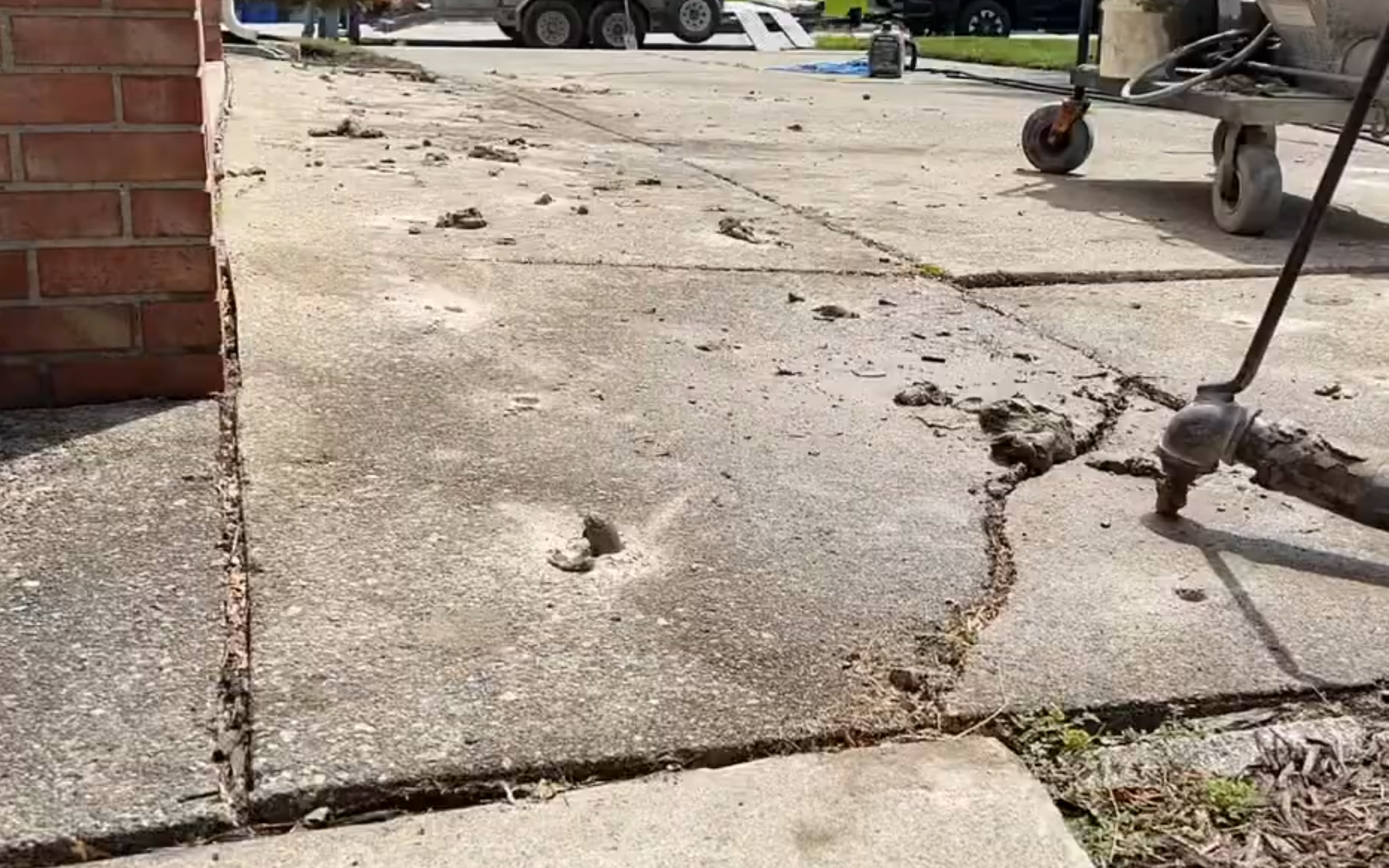
Mudjacking is one of the most widely used and time-tested methods for lifting sunken concrete. The process begins with drilling a series of holes through the concrete slab at carefully chosen locations above the void. Then, using a pump, we force a mixture of water, soil, sand, and Portland cement through those holes and beneath the slab. The pressure from the slurry fills the void and lifts the concrete upward.
The lift is gradual and controlled. Our technicians watch the slab carefully as the material goes in, adjusting pressure and volume to raise the concrete evenly without cracking or overshootin the target level. Once the slab reaches the right height, we stop the injection, withdraw the equipment, and patch the holes with a cement-based filler.
Mudjacking has been used on residential and commercial slabs for decades, and the results speak for themselves. The patching is visible but neat, and the slab performs just as it did before settling. Mudjacking is particularly effective for larger slabs like garage floors, long driveways, and pool decks, where the cost savings over replacement are especially significant.
Concrete jacking, mud jacking, slab jacking — these are all names for essentially the same process. No matter what you call it, the goal is the same: raise your concrete back to level, fill the void, and stabilize the slab so it stays put.
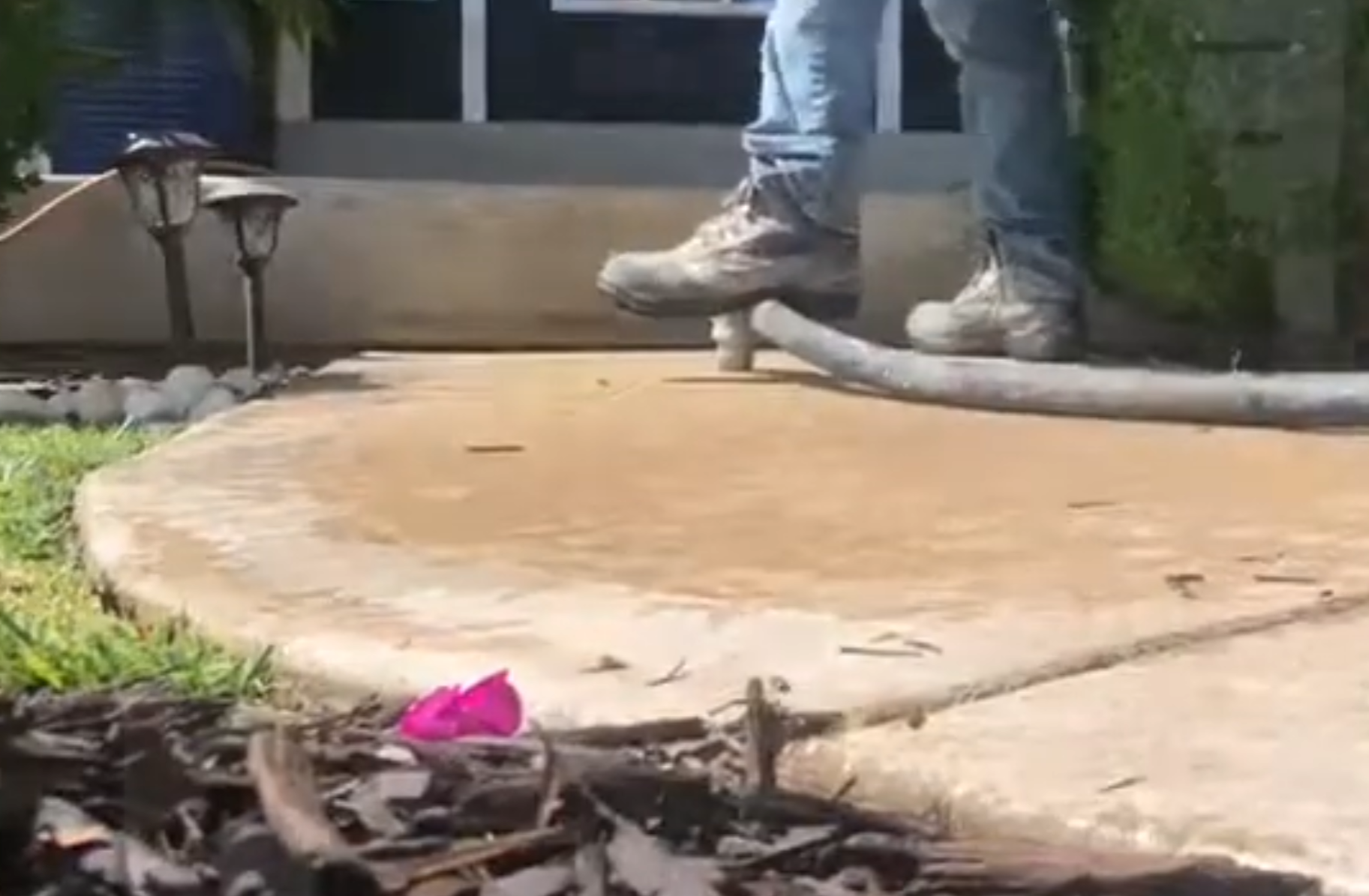
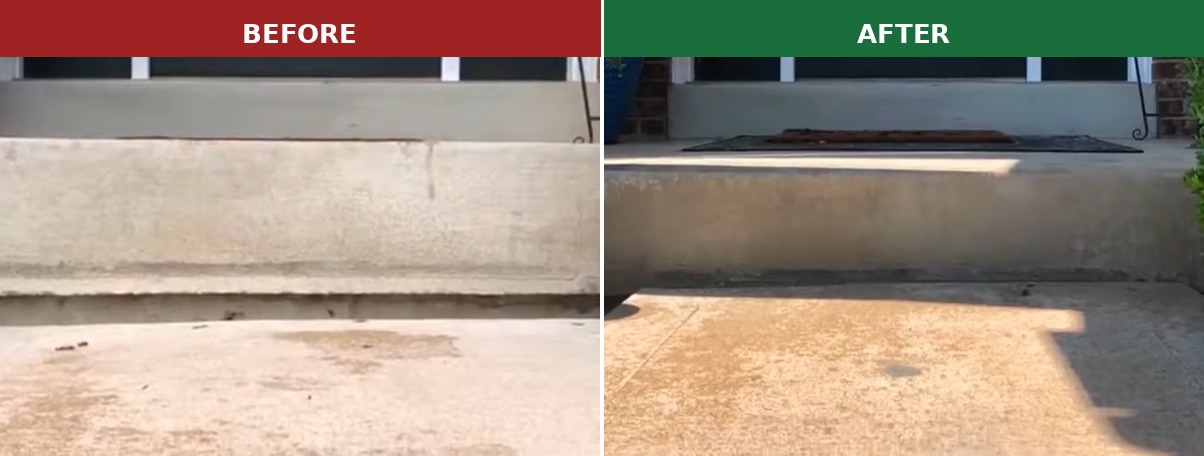
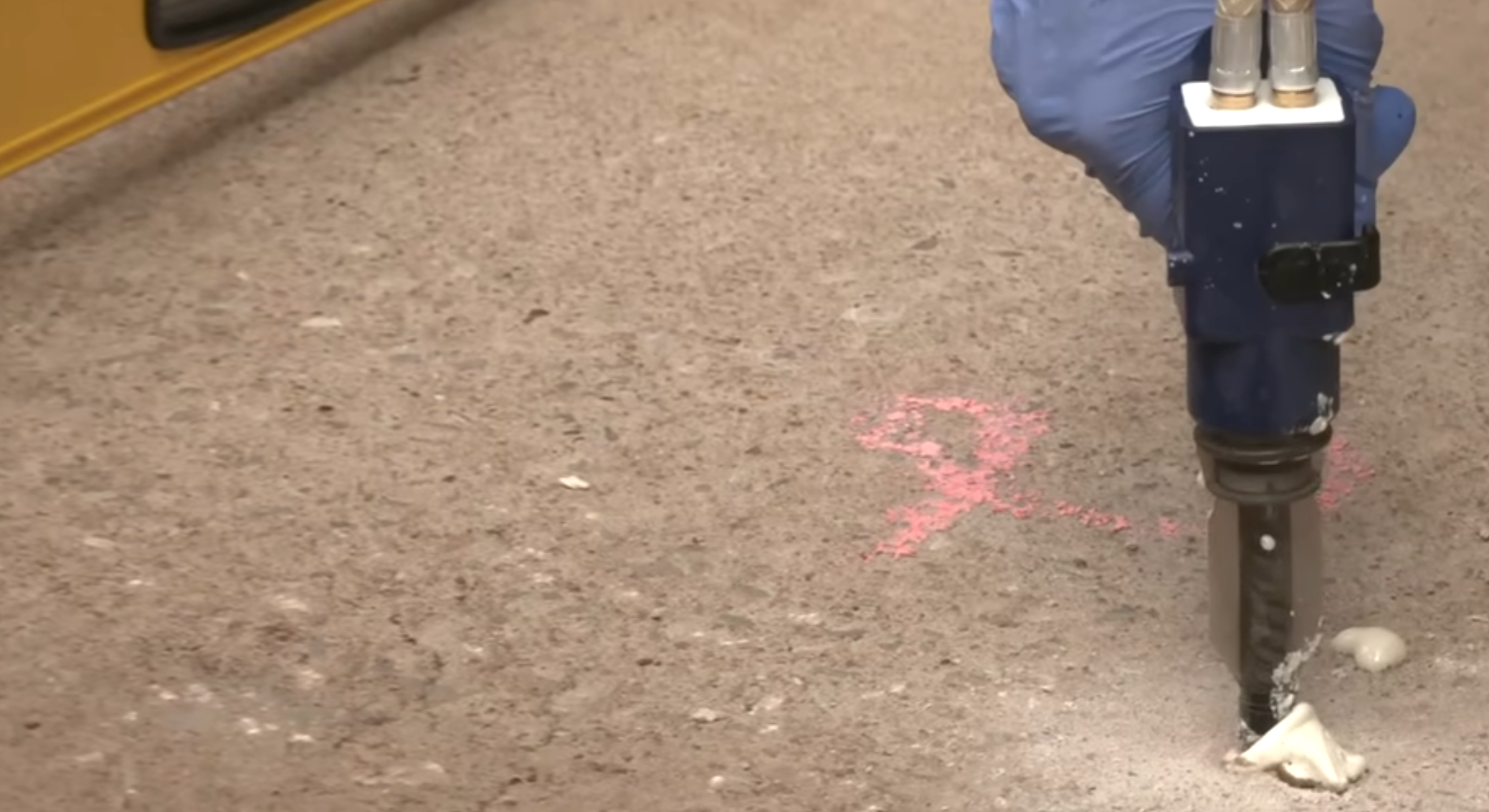
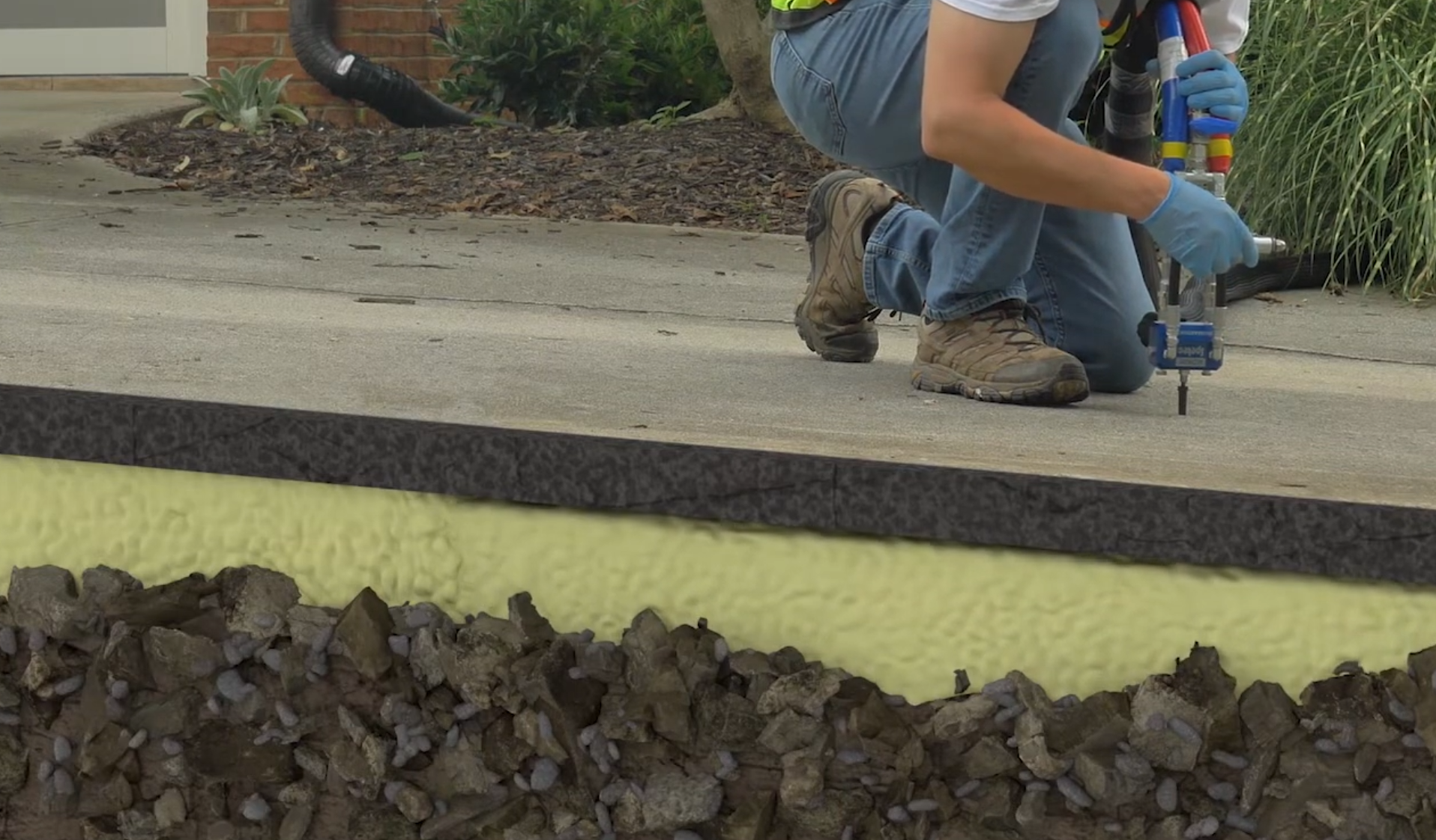
Polyjacking takes a fundamentally different approach to raising concrete. Instead of a heavy slurry mixture, we use a two-part polyurethane foam that is injected through smaller holes and expands rapidly to fill voids and lift the slab. The chemistry behind polyurethane foam means it goes in as a liquid and becomes a rigid, closed-cell material as it reacts with the air and moisture in the void.
The expansion is fast. In many cases the foam begins lifting the slab within seconds of injection. This gives our technicians excellent control over the lift, and it also means the job is done much faster than traditional mudjacking. Most polyjacking projects are fully complete within an hour or two, and the cured foam is ready to bear vehicle weight in as little as 30 minutes.
Because polyurethane foam is water-resistant, it does not wash away or erode over time the way a slurry material can. This is an important advantage in areas where drainage is a factor, which includes most of Central Texas. The foam also weighs dramatically less than the mudjacking slurry, so it adds minimal additional load to the underlying soil.
The injection holes for polyjacking are smaller than those required for mudjacking, which means the finished patch is less noticeable. For homeowners who are conscious of the cosmetic results, polyjacking often produces a cleaner appearance once the patching is done.
Both methods work well. The right choice depends on the size of your project, how quickly you need the surface back in use, and what matters most to you about the finished result.
You need to use the surface quickly. You want smaller, less visible patch holes. The project involves a driveway, sidewalk, pool deck, or patio where appearance and quick turnaround matter. You have drainage issues that could erode a traditional slurry material over time.
Budget is the primary concern on a large project. The slab is a garage floor, warehouse floor, or another large area where cost per square foot matters most. You can allow 24 to 48 hours for the material to cure before using the area for vehicles.
During your free inspection, we assess the slab, evaluate the void, look at drainage, and give you a straight recommendation. There is no pressure to choose one method over another. We tell you which fits your situation and let you make the call.
Applications
Mudjacking and polyjacking work on a wide range of residential concrete surfaces.
Mudjacking and polyjacking typically cost between 25% and 50% of what full concrete replacement would run. Every job is different based on the number of slabs, amount of settlement, and method used, but the savings over replacement are almost always significant. We provide a specific quote during your free inspection.
The risk of cracking during a professional lift is low because the process is gradual and controlled. We monitor the slab continuously and adjust material flow to raise it evenly. Concrete that is already heavily cracked or severely deteriorated may not be a good candidate for leveling, and we will tell you honestly during the inspection if that is the case.
Mudjacking and polyjacking can typically lift slabs that have settled several inches. However, slabs that have sunk very deeply may require more injection points and more material. In rare situations where the settlement is extreme or the slab is broken into too many pieces, replacement may be the better option. We assess each situation individually.
Most residential mudjacking and polyjacking jobs are completed in one to three hours, depending on the number of slabs and the amount of material needed. The inspection and any prep work add a little time. Polyjacking tends to be faster than mudjacking for the actual lifting phase because the foam reacts quickly.
We offer free on-site inspections throughout Central Texas. Call us or submit a request online and we will get back to you promptly.
